How to Choose Industrial Flow Meters for Process Control Applications
Selecting an industrial flow meter is less about finding the instrument with the best accuracy on a datasheet and more about matching the measurement technology to the fluid, the pipe run, and the control objective. A meter that works well on clean water may fail quickly on a non-conductive solvent, a high-solids slurry, or a hot gas stream. The most reliable approach is to define the process conditions before evaluating hardware.
A practical first step is to review how the manufacturer groups its Flowmeter series so you can compare lining options, meter sizes, and output protocols before shortlisting technologies. That comparison helps prevent the common mistake of forcing one meter type into an application it was never designed to handle.
Start with the process questions
Before selecting any flow meter, record the values the instrument will actually see in service. These process data matter more than brand preference or installed cost.
Key inputs include:
– Fluid name, phase, and composition – Conductivity for liquids – Viscosity and density – Solids content and particle size – Minimum, normal, and maximum flow rate – Operating temperature and pressure – Pipe diameter and orientation – Required accuracy and repeatability – Turndown or rangeability – Output signal and communication protocol – Hazardous area classification – Straight-run availability near the installation point
Flow rate is not the only number to consider. A meter sized for normal flow may lose accuracy at night when the line runs at 8% of full scale. A meter sized only for peak flow may never reach a stable measuring range. Turndown is often the difference between a stable control loop and a noisy signal.
Match the measured variable to the process
Start by defining whether the control system needs volumetric flow, mass flow, or both.
Many process control loops require mass flow because batching, chemical reaction, and custody transfer depend on mass rather than volume. Volumetric meters infer flow from velocity or displacement. If density changes with temperature or composition, the mass value shifts unless the system applies a separate density correction. A Coriolis meter measures mass directly and often reports density as a secondary output, which removes that manual correction step.
For water, wastewater, acids, caustics, and other conductive liquids, an electromagnetic meter is often the workhorse choice because it measures volumetric flow with no moving parts and no pressure drop. It does not work for oils, solvents, gases, or steam because those fluids are not conductive enough.
Meter technologies and where they work
Different process conditions favor different principles. The table below summarizes typical industrial meter classes, their common application zones, and the limitations you should check before specifying.
| Technology | Best suited for | Typical published accuracy range | Main limitations | |—|—|—|—| | Electromagnetic | Conductive liquids, water, wastewater, slurries, acids, caustics | ±0.2% to ±0.5% of rate, depending on installation and calibration | Not for gases, steam, oils, or non-conductive fluids | | Coriolis mass | Mass flow, batching, custody transfer, viscous liquids, slurries, some gases | ±0.1% to ±0.2% of rate for liquids; gas performance varies | Pressure drop, size limits, higher installed cost | | Vortex | Steam, gas, clean low-viscosity liquids | ±0.5% to ±1.0% of rate for liquids; gas and steam can be less accurate | Not for low-flow, high-viscosity, or pulsating flow | | Ultrasonic | Clean liquids, large pipes, non-invasive retrofit work | ±0.5% to ±1.0% of rate, depending on type | Sensitive to bubbles, solids, and pipe-wall condition | | Differential pressure | Gas, steam, and liquid applications with known density | ±1% to ±2% of full scale, typical for orifice installations | Lower turndown, permanent pressure loss, installation sensitivity | | Thermal mass | Gas mass flow, compressed air, stack gas | ±1% to ±2% of full scale | Not for liquids, needs known gas composition |
These accuracy ranges are common industrial practice. The actual number depends on calibration, installation, and the meter’s operating point. Always ask for a reference accuracy statement under the same flow, temperature, and pressure conditions you expect.
Electromagnetic flowmeters
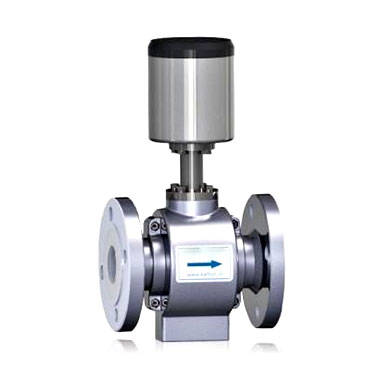
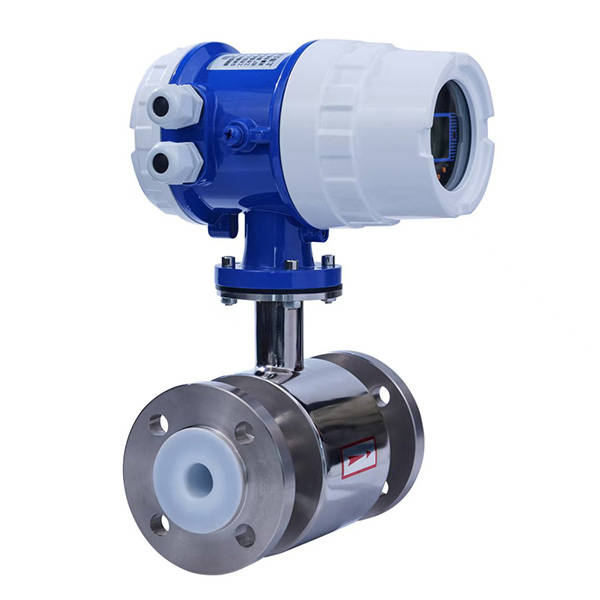
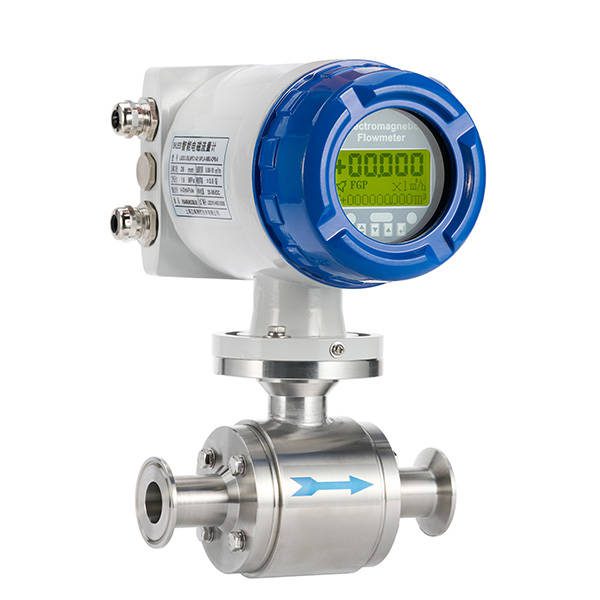
Where the liquid is conductive, an Electromagnetic flowmeter measures volumetric flow through the pipe without restricting the line or adding moving parts. The sensor applies a magnetic field and reads the voltage generated as the conductive fluid moves through it. Because the sensor is full bore, abrasive slurries and solids pass through without damaging an internal obstruction.
Electromagnetic meters are common in raw water intake, wastewater discharge, chemical dosing, and food and beverage lines where the product is water-based. They handle flow in both directions, which helps in lines that reverse during cleanup or system shutdown.
The critical selection factors are liner material, electrode material, and conductivity. Many electromagnetic meter designs require liquid conductivity above roughly 5 µS/cm, although some can operate lower with specific electronics. The liner must resist the chemical environment, and the electrodes must survive both corrosion and abrasion. For a slurry, a ceramic or polyurethane liner may be appropriate. For aggressive acid, a PTFE or PFA liner may be required.
Electromagnetic meters cannot measure oils, hydrocarbons, gases, steam, or most solvent streams. If the fluid can coat the electrodes, the signal can become unstable.
Coriolis mass flowmeters
A Coriolis mass flowmeter reports mass flow directly, which removes density compensation and makes it useful for batching, dosing, and concentration control. The meter oscillates one or more tubes and detects the phase shift created by fluid momentum. That measurement principle works with liquids, slurries, and many gases, including fluids that would defeat thermal, vortex, or electromagnetic meters.
Coriolis meters are often selected when the process value is mass, not volume. Syrup batching, polymer dosing, solvent blending, and custody transfer are typical examples. The same instrument may provide density, temperature, and even derived concentration values, which reduces the number of devices on the line.
The tradeoff is pressure drop. Coriolis tubes create flow resistance, and that loss increases with viscosity and flow rate. The meter also has a practical size limit. Large-line Coriolis meters exist, but weight and cost can make other technologies more practical above certain pipe sizes.
Installation matters. Coriolis meters are relatively insensitive to upstream flow profile, but they are sensitive to mechanical vibration and pipe stress. Supports, expansion loops, and proper isolation from pumps and compressors prevent external noise from degrading the signal.
Other flow meter classes
Vortex meters measure the frequency of vortices shed from a bluff body. They suit steam, compressed air, and clean low-viscosity liquids where the flow rate stays high enough to generate a stable vortex street. High viscosity or low velocity suppresses vortex formation, which limits turndown.
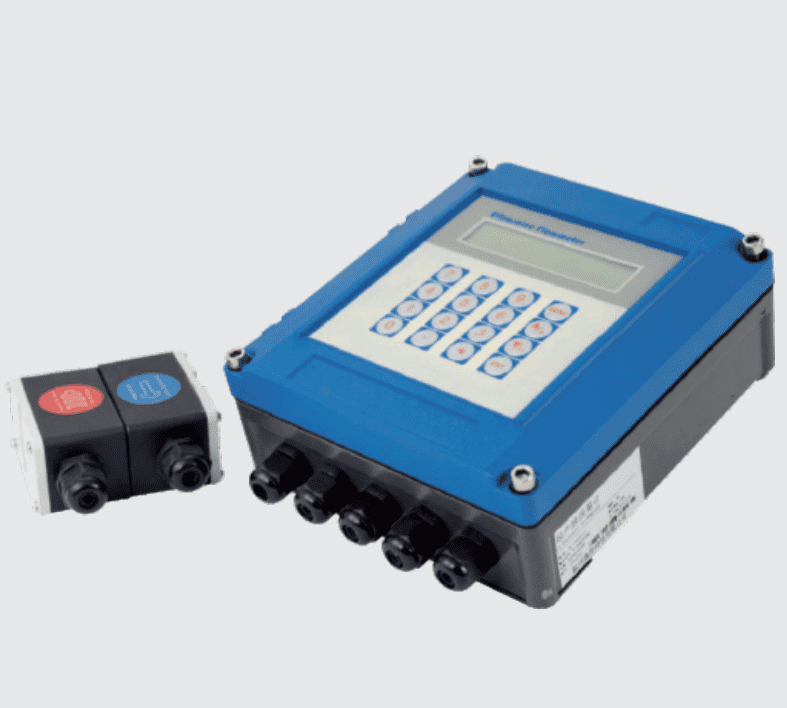
Ultrasonic meters send acoustic signals through the fluid. Transit-time designs work well on clean liquids and can be clamped onto existing pipe without cutting into the line. Doppler ultrasonic meters respond to bubbles or particles, but the stream must contain enough reflectors to produce a usable signal.
Differential pressure meters remain common in steam and gas service because they handle high temperatures and pressures. An orifice plate or averaging pitot tube creates a pressure drop that relates to flow. The installed accuracy depends heavily on straight-run, pipe roughness, and proper tapping. Standards such as ISO 5167 provide detailed installation and calculation guidance for orifice plates.
Thermal mass flow meters are used in gas service when the process needs mass flow without temperature and pressure compensation. They work well for compressed air distribution, burner gas, and stack monitoring. The principle depends on heat transfer, so the gas composition must be stable enough to keep the thermal properties known.
Accuracy, repeatability, and rangeability
Accuracy describes how close the meter reads to the true value. Repeatability describes how consistently it produces the same result for the same flow. For process control, repeatability often matters more than absolute accuracy because a stable signal allows the control loop to maintain a setpoint.
Rangeability, or turndown, is the ratio between maximum and minimum flow over which the meter meets its stated accuracy. A turbine meter might have a turndown of 10:1. An electromagnetic meter might have a turndown of 20:1 or more. A Coriolis meter can offer very wide turndown, but the low end is still limited by pressure drop and zero stability.
Do not assume a meter with high reference accuracy will perform well at 5% of flow. Check the accuracy curve, not just the headline number. Many accuracy claims are expressed as a percentage of rate at the upper end and degrade at low flow. Some differential pressure meters are specified as a percentage of full scale, which means the absolute error becomes large at low flow.
Installation and straight-run requirements
Every flow meter responds to the velocity profile at the sensor. Valves, elbows, reducers, and pumps distort that profile and can shift the reading. Straight-run requirements vary by technology and meter design.
Differential pressure and vortex meters usually need long upstream and downstream runs because they are sensitive to swirl and unstable profiles. An orifice plate may require 20 diameters or more of straight pipe upstream, depending on the fitting combination. Electromagnetic meters generally tolerate shorter runs but still need a fully developed profile for best accuracy. Coriolis meters are relatively immune to profile distortion but need proper pipe supports and freedom from external stress.
When straight run is limited, an in-line flow conditioner can help, but it adds pressure loss and cost. In some cases, a different technology solves the problem more cleanly than trying to condition a difficult pipe layout.
Outputs, diagnostics, and system integration
The flow meter must communicate with the plant control system. The most common loop remains 4–20 mA with HART, but many modern instruments also provide pulse, Modbus, Profibus, Foundation Fieldbus, or Ethernet-based outputs.
For batching, a pulse output can improve resolution because it represents discrete volume or mass units. For diagnostics, a digital protocol exposes more data than an analog signal. Some meters report empty-pipe detection, liner wear, coating, or process noise. Those diagnostics help the maintenance team respond before a failed batch or an unplanned shutdown.
When selecting an instrument, confirm that the output is compatible with the PLC, DCS, or flow computer already installed. Also verify power supply, grounding, and isolation requirements, especially for electromagnetic meters where poor grounding can create unstable readings.
Total cost of ownership
The purchase price is only one part of the decision. A magnetic flowmeter has no moving parts and little pressure loss, but liner and electrode replacement may be needed in abrasive service. A Coriolis meter can be maintenance-free for years, but its pressure drop adds pumping energy every hour the line runs.
Vortex and differential pressure meters may cost less upfront, but a steam orifice plate can erode or foul and requires periodic inspection. Thermal mass meters may need recalibration when gas composition changes. The total cost includes installation, straight-run modification, calibration, downtime, and wasted energy.
A flow meter that saves purchase cost but creates a 2 psi continuous pressure drop can consume more energy over five years than the instrument itself cost. For large lines and high flow rates, pressure loss belongs in the economic evaluation.
A short selection sequence
1. Write down the fluid, flow range, pressure, temperature, and required output. 2. Decide whether the control loop needs mass flow, volumetric flow, or both. 3. Eliminate technologies that cannot handle the fluid. Non-conductive liquids eliminate electromagnetic meters. Low viscosity and clean liquids may allow vortex or ultrasonic. Gases eliminate most electromagnetic and many mechanical options. 4. Compare accuracy, turndown, and repeatability over the actual flow range, not just the best-case point. 5. Check installation constraints, including straight-run, pipe size, and vibration. 6. Confirm materials, hazardous area ratings, and communication protocols. 7. Calculate installed cost, pressure loss, and expected maintenance.
The right meter is usually the one that works well at minimum flow, survives the fluid, fits the pipe, and communicates with the existing control system.
FAQ
What is the difference between mass flow and volumetric flow?
Volumetric flow is the actual volume passing through the pipe per unit time, such as liters per minute or gallons per minute. Mass flow is the amount of material per unit time, such as kilograms per hour. If density changes with temperature, pressure, or composition, volumetric flow does not equal a stable mass flow. A Coriolis meter measures mass directly.
Which flow meter works best for wastewater?
Wastewater is conductive and often contains solids, so an electromagnetic flowmeter is the common choice. It has no moving parts and passes solids without an obstruction. Liner and electrode selection should match the solids loading and chemical content.
Can an electromagnetic flowmeter measure oil or solvent?
No. An electromagnetic flowmeter needs a minimum liquid conductivity. Oils, hydrocarbons, and most solvents are non-conductive and will not generate a usable signal. Use a Coriolis, positive displacement, turbine, or ultrasonic meter depending on the fluid and flow range.
When should I select a Coriolis mass flowmeter?
Select a Coriolis meter when the process needs mass flow, density, or derived concentration, or when the fluid is non-conductive, viscous, or subject to changing density. It is also useful for batching and custody transfer where direct mass measurement improves repeatability.
What is turndown in a flow meter?
Turndown is the ratio between maximum and minimum flow rates over which the meter meets its stated accuracy. A 20:1 turndown means the meter can be trusted from 100% down to 5% of the calibrated maximum. High turndown helps when the line runs over a wide flow range.