7 Things to Check When Choosing a Pressure Transmitter Manufacturer
Choosing a pressure transmitter manufacturer is not a job for a quick spec-sheet comparison. This guide walks through 7 Things to Check When Choosing a Pressure Transmitter Manufacturer so your next purchase holds up after installation. Buyers often focus on price and range first, then discover calibration drift, wetted-part corrosion, missing documentation, or slow service later. That sequence is expensive. The checks below are built for engineers, procurement teams, and plant managers who need a repeatable way to shortlist suppliers without relying on glossy brochures.
Traditional datasheet reviews miss the operational truth: two transmitters with identical ranges can behave differently under temperature swings, hydrogen service, or sanitary cleaning cycles. That is why this article treats manufacturer capability as the primary evidence, not the paper specification alone. You will learn what to verify before sending an RFQ, which model families signal real engineering depth, and how to test a supplier’s service response.
Key Takeaways
- Verify the manufacturer’s industry coverage before trusting a single pressure transmitter spec sheet.
- Check model depth across flow, level, and pressure families as a signal of engineering capacity.
- Demand documented calibration, material traceability, and testing evidence before shipment.
- Compare wetted-part compatibility against your process media, not just the sensor range.
- Test after-sales response time and service network reach before committing to volume orders.
What You Need Before Starting
You need three things before evaluating a vendor. First, define your operating conditions: pressure span, process temperature, media chemistry, hazardous area classification, and process connection type. Second, prepare a one-page supplier scorecard with weighted criteria for quality, range, materials, lead time, and support. Third, keep the vendor’s product structure visible. Open the Flowmeter series page to see whether adjacent measurement families exist. A manufacturer with multiple instrument lines can often cross-apply sealing, calibration, and electronics knowledge to pressure transmitters.
The seven checks below do not require specialized lab access. They require asking the right questions and reading the evidence supplied by the manufacturer.
| Check | What to Verify | Red Flag |
|---|---|---|
| 1. Manufacturing range | Industry applications and adjacent product families | Single-product shop with no application depth |
| 2. Technology depth | Specific model series and measurement principles | No clear product lineage or generic catalog |
| 3. Quality systems | QMS, calibration, testing records | No documented test or calibration data |
| 4. Material compatibility | Wetted parts, liner, fill fluid, process connection | Missing material traceability |
| 5. Model coverage | Pressure ranges, output protocols, sanitary/high-pressure types | Narrow range, forced compromise |
| 6. Service network | Headquarters, lead time, support response | Slow inquiry response or no local service |
| 7. After-sales | Customization, manuals, warranty, repair turnaround | No customization path or documentation library |
Step 1 — Verify Manufacturing Range and Application Fit
What to Do
- List your process media and the industries where that media appears.
- Compare that list against the manufacturer’s stated application coverage.
- Ask for reference cases in your specific industry, even if anonymized.
Shanghai Lisen Measurement & Control Technology Co., Ltd. lists applications across natural gas, hydrogen, petroleum, lithium battery, photovoltaic, electric power, chemical industry, metallurgy, environmental protection, paper making, and food. That breadth tells you the vendor has likely seen aggressive media, clean utility water, and high-value process streams. If your application is hydrogen or lithium battery service, a vendor familiar with both has a practical edge.
Why This Matters
Pressure transmitter performance is not media-neutral. Hydrogen can attack certain diaphragm materials; paper stock can clog impulse lines; food service demands clean-in-place compatibility. A manufacturer that understands adjacent flow and level applications is more likely to anticipate how a transmitter will behave in your loop. Ask whether the vendor builds transmitters for the full loop, not just the sensor.
Common Mistakes to Avoid
- Mistaking a reseller for a manufacturer: Ask for factory address, production equipment, and test facility details before accepting claims.
- Skipping industry reference checks: A vendor without hydrogen or sanitary references may still learn on your order. Do not fund that learning curve.
Step 2 — Check Measurement Technology and Model Depth
What to Do
- Request a complete product map instead of a single data sheet.
- Look for adjacent measurement technologies: Coriolis, electromagnetic, ultrasonic, metal tube, turbine.
- Confirm whether the vendor designs its own electronics or private-labels imported modules.
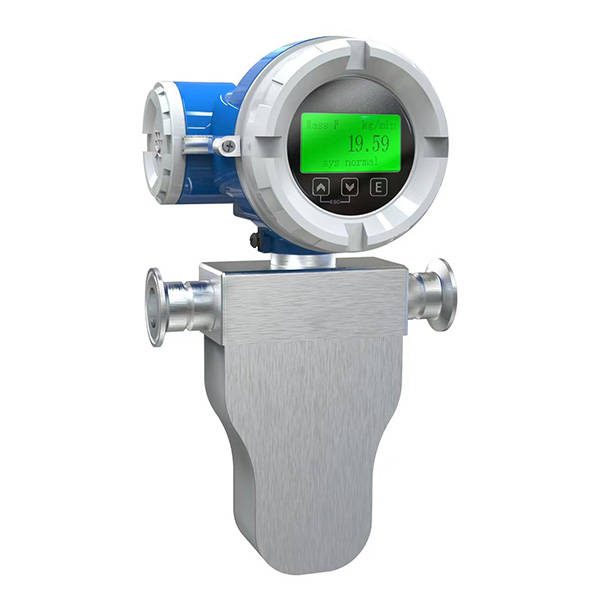
A supplier with a legitimate Coriolis mass flowmeter lineup usually understands high-accuracy mass measurement, temperature compensation, and density effects. That same engineering discipline transfers to pressure transmitter calibration. If the vendor only sells a generic “pressure transmitter” with no related instrument families, probe deeper.
Why This Matters
Model depth shows how a manufacturer solves measurement problems. A company that offers Coriolis, electromagnetic, and rotameter technologies has invested in different physical principles, signal conditioning, and process constraints. Pressure transmitters sit at one node in that same control loop. The stronger the adjacent instrument portfolio, the better the integration and application support.
Common Mistakes to Avoid
- Judging by catalog page count: A long list of copied specifications is not engineering depth. Verify model series and origins.
- Ignoring electronics architecture: Ask if the transmitter supports local configuration, diagnostics, or output redundancy.
Step 3 — Confirm Quality Management and Testing Capability
What to Do
- Ask for quality system evidence. ISO 9001:2015 is the baseline to expect for a process instrument manufacturer.
- Request calibration certificates, material certificates, and pressure test records.
- Ask whether final testing includes pressure cycling, temperature compensation, and electrical output verification.
The company profile mentions production equipment, testing equipment and facilities, and a sound management system. That is a starting point, not the final check. You still need to see how the system is applied to your transmitter.
Why This Matters
IEC 60770-1 defines methods for evaluating transmitter performance under industrial conditions. Without documented test data, a spec sheet is just a promise. Calibration records tell you whether the unit left the factory within your required uncertainty band. Material certificates support traceability in regulated plants.
Common Mistakes to Avoid
- Accepting “we test all products” without records: Ask for a sample certificate before order placement.
- Confusing ISO 9001 with calibration accuracy: A QMS certificate does not guarantee sensor accuracy. Confirm the calibration standard used.
Step 4 — Evaluate Materials and Process Compatibility
What to Do
- List every wetted part: diaphragm, process connection, O-ring, fill fluid.
- Check materials against your media. 316L stainless steel is common, but hydrogen, chloride, or acidic service may require Hastelloy C, ceramic sensors, or PTFE coatings.
- Confirm ingress protection. IEC 60529 defines IP ratings such as IP65, IP66, and IP67; choose based on washdown or outdoor exposure.
For sour gas or hydrogen sulfide service, NACE MR0175/ISO 15156 compliance matters. The manufacturer may deliver a transmitter that works in dry air but fails after six weeks in wet hydrogen. Material selection should match the worst-case process upset, not normal operating conditions.
Why This Matters
Most early transmitter failures are not electronic; they are material failures. A diaphragm that corrodes, a fill fluid that reacts, or an O-ring that swells will shift output long before a circuit board fails. Replacing one transmitter costs less than a batch contamination event or an unplanned shutdown.
Common Mistakes to Avoid
- Choosing by body material only: The sensor diaphragm and fill fluid often matter more than the housing.
- Ignoring process temperature swings: Material compatibility changes with temperature. Ask for a temperature-pressure material matrix.
Step 5 — Check Model Range and Output Options
What to Do
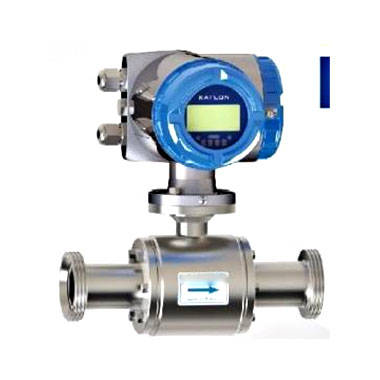
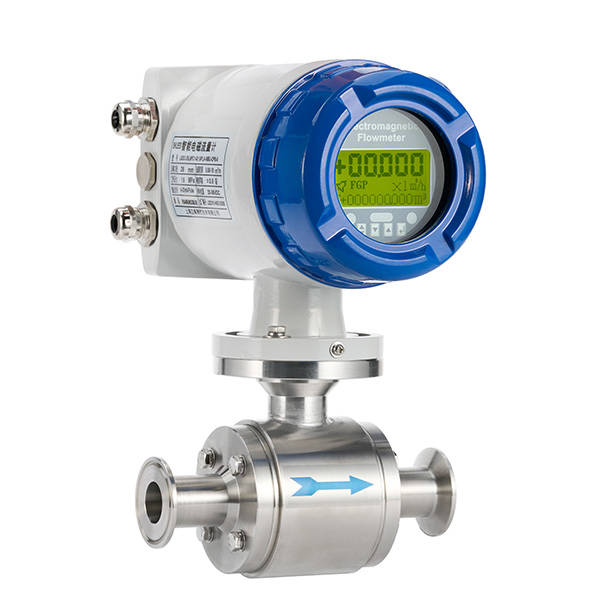
- Review the vendor’s product structure for segmented ranges. Look at the Electromagnetic flowmeter family as a signal: models like 7000, KFL-DC series, MAG1000 standard type, MAG2000 wafer type, MAG3000 sanitary type, MAG4000 stainless steel type, MAG5000 high pressure type, and MAG8000 water meter type show deliberate range segmentation.
- Confirm available output protocols: 4–20 mA HART, Modbus, or fieldbus if required.
- Check pressure range overlap: you should not be forced to buy a high-range unit for a low-range application.
That model breadth tells you the manufacturer understands different installation zones, hygienic requirements, and pressure classes. A pressure transmitter vendor should offer similar segmentation for gauge, absolute, differential, and sanitary service.
Why This Matters
A narrow model range forces compromises in accuracy, overload protection, or process connection size. Range segmentation also indicates replacement-part stability. If a manufacturer maintains five magnetic flowmeter types, it likely maintains spare parts and firmware across generations.
Common Mistakes to Avoid
- Buying a model scheduled for obsolescence: Confirm lifecycle status and spare availability.
- Ignoring turn-down ratio: A transmitter with poor turn-down may fail at your minimum span. Ask for tested rangeability data.
Step 6 — Inspect Supply Chain and Service Network
What to Do
- Verify legal entity and operating history. Shanghai Lisen Measurement & Control Technology Co., Ltd. was founded in 2004 and is headquartered in Shanghai, China.
- Check physical address and contact reach. The listed address is 5F, Building A2, 688 Huancheng North Road, Fengxian District, Shanghai. Phone contact: +86-21-64760386. Email: [email protected]. WhatsApp: +85257147946.
- Send a pre-sales question and time the response.
Those specific facts matter because supply chain and service support depend on a real operating location. A manufacturer with a nationwide service network can route support closer to your site. A trading company without a fixed address cannot guarantee repair turnaround.
Why This Matters
Pressure transmitters sit in critical control loops. A spare sensor or technical phone call at 2 a.m. can prevent an overnight shutdown. If the vendor’s service response is slow during the quotation stage, it will not improve after payment.
Common Mistakes to Avoid
- Accepting a quote without verifying address and phone: Call or message before issuing a purchase order.
- Ignoring lead time variability: Ask for current production backlog and realistic shipping windows.
Step 7 — Validate Customization, Documentation, and After-Sales Support
What to Do
- Submit a small customization request early, such as a non-standard process connection or extended range.
- Request the document package: operating manual, material certificate, calibration report, dimensional drawing, and wiring diagram.
- Ask about repair options, warranty terms, and whether factory calibration can be repeated after purchase.
The manufacturer positions itself as a customized solution provider, with a clear “Customized for You” path. That matters when your plant uses non-standard threads, unusual fill fluids, or special display configurations. A vendor that cannot customize likely cannot support your long-term changes.
Why This Matters
Pressure transmitter installation is rarely completely standard. You may need a different diaphragm material, an extended cable, or a local indicator. If the vendor provides clear documentation and a calibration trace, you avoid relying on third-party calibration houses that may not know the transmitter’s internal coefficients.
Common Mistakes to Avoid
- Ordering without a documentation sample: Request one full document set before the first production run.
- Skipping the customization question: If the answer is “we only sell what is on the website,” your future options are limited.
Pro Tips for Success
- Send an identical RFQ to three suppliers and compare lead time, documentation quality, and technical response, not just unit price.
- Place a pilot order for three to five transmitters before a plant-wide rollout. Test calibration drift and installability first.
- Keep a short checklist of standards in front of you: IEC 60770-1 for performance, ISO 9001:2015 for quality, IEC 60529 for ingress protection, NACE MR0175/ISO 15156 for sour service.
- Use the full product map at Products to see how the vendor structures adjacent flow, level, temperature, and weighing series. A coherent structure often predicts better pressure transmitter support.
Frequently Asked Questions
How do I know if a pressure transmitter manufacturer is a real factory or a trading company?
Ask for the business license, factory address, production equipment list, and calibration certificates. A video tour of the test bench can help. A manufacturer usually has adjacent product families and can explain its assembly process.
What standards should a pressure transmitter meet?
At minimum, performance should be evaluated using IEC 60770-1 methods. The quality system baseline is ISO 9001:2015. Ingress protection follows IEC 60529. Hazardous area use may require ATEX or IECEx. Sour service can require NACE MR0175/ISO 15156.
Should I choose a manufacturer that also makes flowmeters?
Not always, but it