Sanitary Flowmeter Guide for Food, Beverage and Pharmaceutical Applications
Introduction
Specifying a sanitary flowmeter for food, beverage, or pharmaceutical production is not the same as picking an industrial water meter. A hygienic line must be cleanable, drainable, and free of dead spaces where product can lodge and bacteria can grow. The meter body, liner, gasket, and connection design all affect cleanability and regulatory acceptance.
This sanitary flowmeter guide for food, beverage and pharmaceutical applications gives process engineers, plant managers, and QA teams a practical selection sequence. It covers media evaluation, technology matching, surface finish, documentation, installation, and validation. Traditional industrial instruments often fail hygiene audits because they use threaded connections, rough cast surfaces, or large dead legs. The better approach is to evaluate the meter as part of the clean process boundary, not as an isolated device.
Shanghai Lisen Measurement & Control Technology Co., Ltd., founded in 2004, supplies flowmeter and pressure transmitter products for hygienic and industrial processes. The following steps work whether you are specifying a new line or replacing a failed instrument.
Key Takeaways
- Define fluid conductivity, viscosity, temperature, and CIP/SIP exposure before comparing meter technologies.
- Match the measuring principle to the actual clean process, not to the plant’s general water meter.
- Require product-contact surface finish of Ra 32 microinch 0.8 µm or better for most dairy and beverage duties.
- Demand traceable material certificates, calibration records, and hygiene certificates such as 3-A, EHEDG, or ASME BPE.
- Install meters for self-draining cleanability, then verify performance under real process conditions.
What You Need Before Starting
Before selecting a sanitary flowmeter, collect the process data and hygiene requirements. You need to know the fluid, the cleaning method, and the audit standards the line must meet.
- Flow range, operating temperature, pressure, and viscosity of the process fluid.
- Electrical conductivity if evaluating an electromagnetic design.
- Cleaning method: CIP temperature, SIP temperature, chemical concentration, and cycle time.
- Required hygiene standard: 3-A Sanitary Standards, EHEDG, ASME BPE, or FDA 21 CFR Part 177.
- A shortlist of available hygienic meter styles. Review the Flowmeter series to see technologies that can be configured for sanitary service.
Keep the data in one document. The same information will be used for sizing, material verification, and validation planning.
Step 1 — Define Process Media and Hygienic Requirements
What to Do
- List the product name and its phase: liquid, emulsion, slurry, or viscous syrup.
- Record normal and maximum flow rates, plus minimum flow during batching or flushing.
- Measure or obtain conductivity. Electromagnetic flowmeters require a conductive liquid, typically above 5 µS/cm in general industry practice.
- Identify cleaning and sterilization conditions. Many food lines run CIP at 85 °C, while SIP in pharmaceutical systems commonly reaches 121 °C to 135 °C.
- Note whether the line is self-draining and whether the meter can be mounted vertical or horizontal.
Why This Matters
The process media determines which flowmeter technologies can survive and perform accurately. A meter that works on milk may fail on a high-solids soup or a non-conductive oil. Cleaning temperature also matters because liner materials and gaskets expand differently. A meter with good room-temperature accuracy but poor steam resistance will fail early in a WFI or purified water loop.
Common Mistakes to Avoid
- Ignoring viscosity changes: a turbine meter sized for water may read inaccurately on syrup or cream.
- Overlooking minimum flow in batching: many meters lose accuracy at the low end of a batch dose.
- Treating CIP as an afterthought: the meter body must tolerate hot acid or caustic cycles without swelling or cracking.
Step 2 — Match Meter Technology to the Application
What to Do
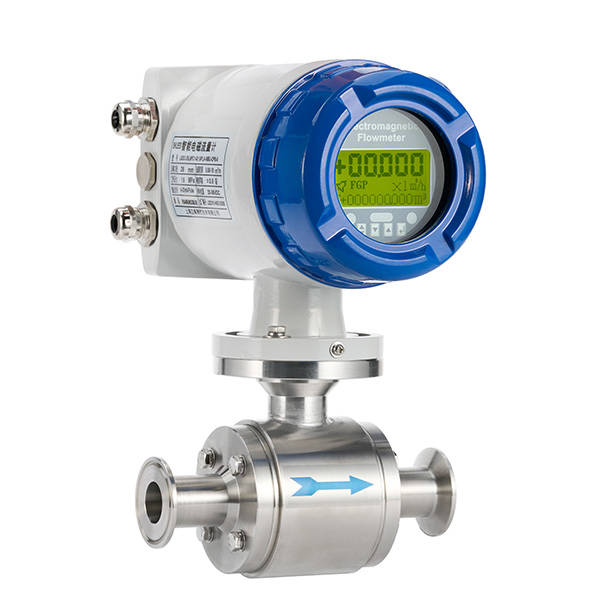
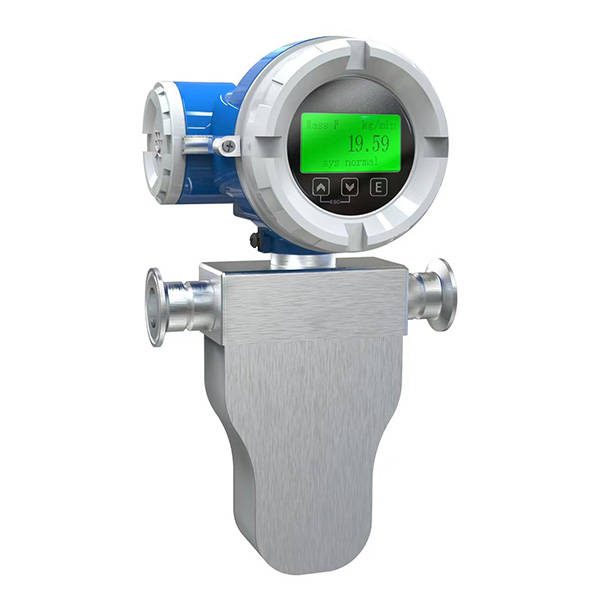
Compare the main hygienic flowmeter technologies against the process data from Step 1. A Electromagnetic flowmeter works well for conductive dairy, beverage, and CIP fluids because it has no moving parts and a smooth liner. For batching, high viscosity, or direct mass measurement, evaluate a Coriolis mass flowmeter. A metal tube rotameter can handle low-flow batching or purge lines when the tube drains fully. Turbine and ultrasonic meters may be used in some hygienic loops, but their cleanability and accuracy must be verified.
| Technology | Best for | Key sanitary consideration | Example in product range |
|---|---|---|---|
| Electromagnetic flowmeter | Conductive liquids, dairy, beverages, CIP flows | Liner must be food-grade polymer; no moving parts | MAG3000 Sanitary type |
| Coriolis mass flowmeter | Batching, viscous syrups, mass measurement | Straight tube designs reduce product entrapment | Z Straight tube series LSCG |
| Ultrasonic flowmeter | Non-intrusive checks, clean water, WFI | Clamp-on accuracy depends on pipe material and wall thickness | Ultrasonic flowmeter |
| Metal tube rotameter | Low-flow batching, purge lines | Tapered tube must drain completely | LZ Metal tube float flowmeter |
| Turbine flowmeter | Low-viscosity liquids, fast response | Bearings can trap product if not a true sanitary design | Turbine flowmeter |
Why This Matters
Different measuring principles introduce different failure modes in hygienic service. A standard turbine bearing can harbor product, while an electromagnetic meter with an unapproved liner can leach into the fluid. The table above helps you eliminate designs that cannot meet the hygiene standard or the accuracy requirement.
Common Mistakes to Avoid
- Selecting a magnetic flowmeter for non-conductive fluid: it will not produce a stable signal.
- Using a turbine meter with viscous product: viscosity changes the meter factor and reduces accuracy.
- Buying an industrial design and calling it sanitary: the body may be stainless, but internal crevices still trap residue.
Step 3 — Verify Materials, Surface Finish, and Connections
What to Do
Check the wetted parts first. Product-contact surfaces should be 316L stainless steel or an FDA-compliant PFA/PTFE liner. Elastomers must meet the process temperature and chemical exposure limits. Surface finish is not cosmetic. 3-A Sanitary Standards and EHEDG design criteria commonly require product-contact surfaces finished to Ra 32 microinch 0.8 µm or better. Pharmaceutical water systems often specify 0.4 µm Ra or finer surfaces under ASME BPE guidance.
Connections also matter. Sanitary clamp fittings such as Tri-Clamp, DIN 11851, SMS, or IDF are preferred because they allow fast removal and inspection. Avoid threaded joints on product-contact paths. Dead legs should be minimized, ideally no greater than 2D where the branch length is less than twice the internal diameter. The meter body should drain by gravity when the line is stopped.
Why This Matters
Rough surfaces and crevices protect microorganisms from cleaning chemicals and heat. Even a small pit can allow biofilm to survive a CIP cycle. The surface finish, connection type, and dead-leg ratio directly affect whether the line passes hygiene validation. For dairy and pharmaceutical applications, the finish and connection are often audited before the meter’s accuracy is even discussed.
Common Mistakes to Avoid
- Specifying a smooth external finish only: the wetted path must be polished, not just the housing.
- Using standard industrial flanges on a hygienic line: gasket grooves and threaded bolt holes create contamination points.
- Ignoring gasket material: EPDM, silicone, PTFE, and FKM have different temperature and chemical limits.
Step 4 — Confirm Documentation, Calibration, and Hygiene Certification
What to Do
Request the document package at quotation stage. The manufacturer should provide material certificates for wetted parts, surface finish reports, calibration certificates, and pressure test records. For food contact, a declaration or certificate referencing FDA 21 CFR Part 177 or 3-A Sanitary Standards is common. For pharmaceutical water or clean utilities, ASME BPE or EHEDG Type EL documentation may be required.
Calibration must be traceable to national or international standards. Ask about the calibration range and whether the meter was tested on water or a fluid similar to your process. If you are buying a Flowmeter series product, confirm whether the manufacturer can supply a sanitary configuration with a hygienic certificate before shipping.
Why This Matters
Documentation proves the instrument meets the clean design requirements. Without material traceability, a QA auditor cannot verify that the wetted path is truly 316L or that the liner is approved. Calibration records also support process validation and future deviation investigations.
Common Mistakes to Avoid
- Accepting a generic ISO certificate without material traceability: it does not prove the product-contact surface is compliant.
- Buying a meter calibrated far outside your operating range: accuracy may be poor at real process flow rates.
- Overlooking elastomer documentation: a compliant metal body with an unapproved gasket still fails the audit.
Step 5 — Plan Installation, Validation, and Maintenance
What to Do
Install the meter in a location that drains naturally. For electromagnetic flowmeters, keep the meter full of liquid and avoid mounting at the lowest point where solids can settle. For Coriolis meters, support adjacent pipework to reduce vibration from pumps. After installation, perform a validation check against a known volume or master meter. Document the readings at three flow rates: minimum, normal, and maximum.
Build the meter into the cleaning schedule. Inspect gaskets, liners, and clamp connections during shutdown. Replace elastomers according to the manufacturer’s recommended interval. If the line changes product, re-verify the meter with the new fluid properties. Shanghai Lisen Measurement & Control Technology Co., Ltd. can be contacted at +86-21-64760386 or [email protected] for selection support.
Why This Matters
A certified meter installed incorrectly can still fail hygiene and accuracy checks. Poor drainage creates a hold-up point. Vibration stresses connections and causes drift. Installation validation closes the gap between the meter’s laboratory performance and its real process performance.
Common Mistakes to Avoid
- Mounting a sanitary meter in a low spot that cannot drain: product pools and contaminates the next batch.
- Skipping post-install calibration verification: shipping vibration and wiring errors can shift output.
- Forgetting spare gaskets and clamps: a missing hygienic gasket can stop production longer than the meter itself.
Pro Tips for Success
- Request a single document package that includes material certificates, calibration, and hygiene evidence. This speeds up audit preparation and avoids scattered records.
- For batching applications with variable viscosity, verify whether a Electromagnetic flowmeter or a Coriolis mass flowmeter fits better based on conductivity and mass measurement needs.
- Keep the meter body accessible. Clamp connections make inspection easier, but only if technicians can reach them without dismantling nearby pipe.
- Treat the sanitary flowmeter as part of the clean boundary, not just a measurement point. The finish, gasket, and connection are as important as the stated accuracy.
Frequently Asked Questions
What surface finish is required for a sanitary flowmeter?
For most food and dairy lines, product-contact surfaces should meet Ra 32 microinch 0.8 µm or better. Pharmaceutical water systems may require 0.4 µm Ra or finer. Always verify the finish against the specific 3-A, EHEDG, or ASME BPE requirement.
Can one flowmeter handle both dairy and pharmaceutical water service?
It depends on the construction and documentation. A 316L meter with a hygienic liner, polished surface, and traceable certificates may suit both. However, WFI and SIP conditions often require higher temperature ratings and tighter surface finish than standard dairy duty.
Do sanitary flowmeters need special calibration?
Yes. Calibration should be traceable and ideally performed at flow rates close to your operating range. If the process fluid properties differ from water, discuss the meter factor or perform a process-fluid verification before full production use.
How often should sanitary flowmeter gaskets be replaced?
Inspect gaskets during planned shutdowns and replace them according to the manufacturer’s recommendation. In aggressive CIP or SIP service, gaskets may need replacement more often than the meter body. Cracked or swollen gaskets indicate chemical incompatibility.
Conclusion
This sanitary flowmeter guide for food, beverage and pharmaceutical applications shows why hygiene engineering must guide meter selection. The correct sequence is not simply choosing a measuring principle. It is defining cleanability requirements, matching the technology, verifying surface finish and materials, collecting documentation, and then installing and validating correctly.
That approach works because it treats the flowmeter as a product-contact surface, not just a transducer. The highest accuracy means little if the meter creates a contamination risk. Start with process data and hygiene standards, then narrow the options. Review the Flowmeter series at https://www.leestransmitter.com/ and contact the manufacturer with your flow range, temperature, cleaning method, and required certificate. A documented sanitary flowmeter reduces audit risk and supports stable process control.