Electromagnetic flow meters (magmeters) are essential for accurate liquid measurement in food and beverage processing. Choosing between sanitary and standard models can significantly impact cost, compliance, and operational efficiency. This guide helps you select the right flow meter for your facility, whether you need an electromagnetic flow meter for beer, pure water, or jam, or a food grade flow meter for dairy and beer.
Key Requirements for Food-Grade Flow Meters
Food and beverage applications require hygienic electromagnetic flow meters that meet strict hygiene and safety standards:
Hygienic Design
- 3-A Sanitary Certification: Ensures smooth surfaces (≤0.8 µm roughness) with no crevices to prevent bacterial growth.
- FDA-Compliant Materials: PTFE or PFA liners and 316L stainless steel electrodes prevent contamination.
- CIP/SIP Compatibility: Withstands high-temperature caustic cleaning cycles.
Material Safety
- Non-toxic, non-absorbent materials.
- No lubricants or seals that could harbor pathogens.
Performance in Low-Conductivity Fluids
- Advanced models with “Signal Boost” technology can measure low-conductivity liquids like milk (~500 µS/cm).
- Ideal for applications requiring a conductivity meter for food and beverage or a food grade electromagnetic flow meter.
5-Year Total Cost of Ownership (TCO) Comparison
| Cost Factor | Sanitary Model | Standard Model |
|---|---|---|
| Initial Purchase Cost | $9,200 | $4,500 |
| Annual Cleaning Cost | $1,100 (CIP) | $3,800 (Manual) |
| Maintenance Parts | $0 (Tri-clamp) | $420/year |
| Downtime Cost | 2 hours/month | 8 hours/month |
| Regulatory Risk | Low | High (Fines up to $50K) |
Key Takeaway: Despite higher upfront costs, sanitary models save $19,600 over 5 years due to lower cleaning, maintenance, and downtime expenses.
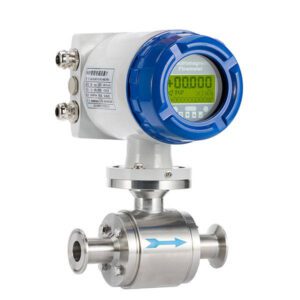
Installation & Material Selection Guide
1. Proper Installation
- Maintain 1.5x pipe diameter distance from valves or elbows.
- Use self-draining orientation to prevent fluid pooling.
2. Material Compatibility
| Application | Recommended Liner | Electrode Material |
|---|---|---|
| Acidic Juices | PFA | Hastelloy C22 |
| Dairy Products | PTFE | 316L SS (Electropolished) |
| Beer/Wine | PFA | Titanium |
3. Validation Requirements
- Request IQ/OQ documentation from suppliers.
- Ensure 3.1 material certificates for traceability.
When to Choose Sanitary vs. Standard Models
Sanitary Models Are Best For:
- FDA-regulated products like milk, juice, and beer (electromagnetic flow meter for beer, food grade flow meter for dairy and beer).
- High-cleanliness zones (Grade A/B).
- Facilities with daily CIP cycles.
Standard Models May Work For:
- Utility water or non-product contact lines (electromagnetic flow meter for pure water).
- Budget-limited projects where hygiene is less critical.
Pro Tip: For specialized food applications such as jams or low-conductivity liquids, a food grade electromagnetic flow meter for jam or a hygienic electromagnetic flow meter ensures both safety and measurement accuracy.