
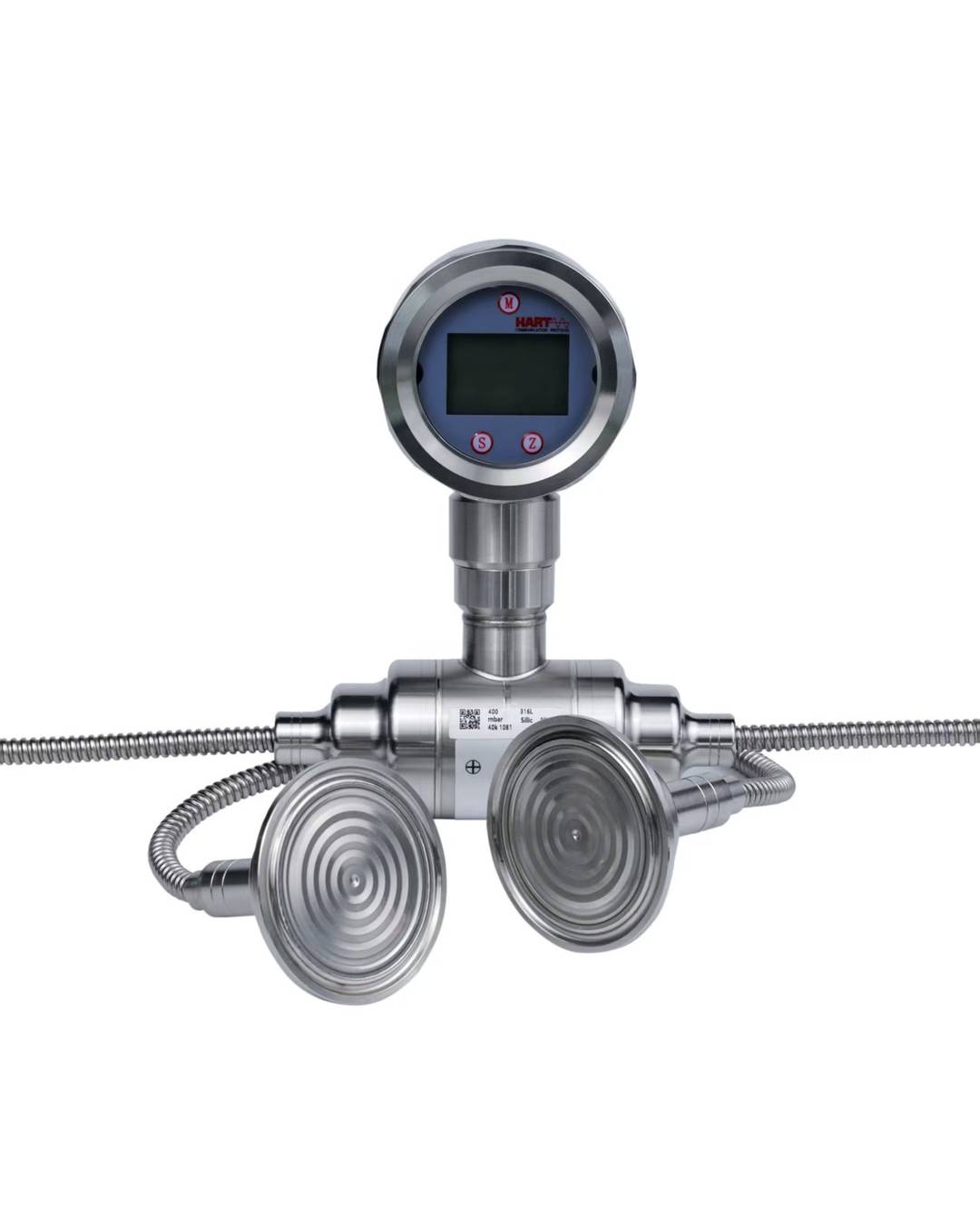
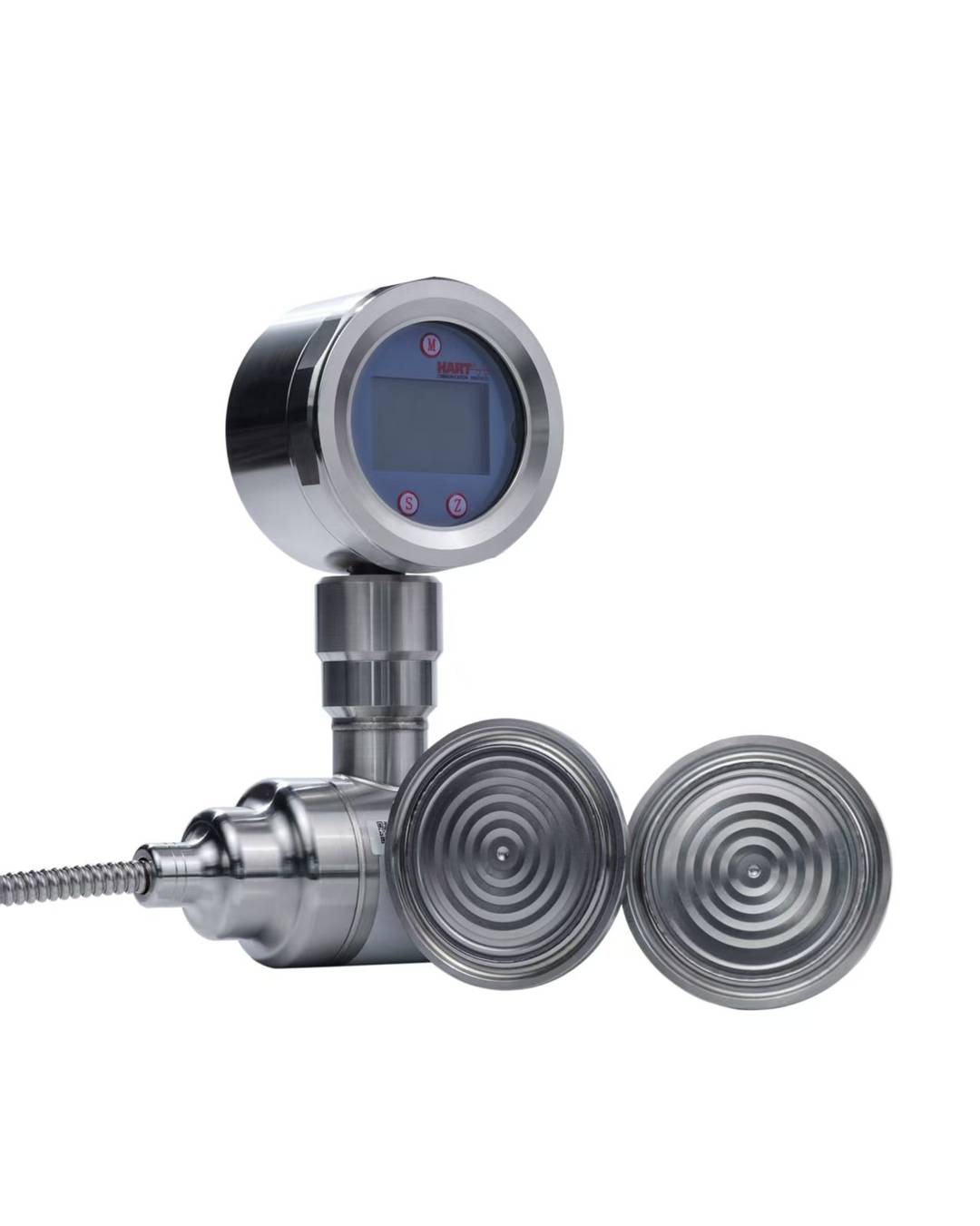
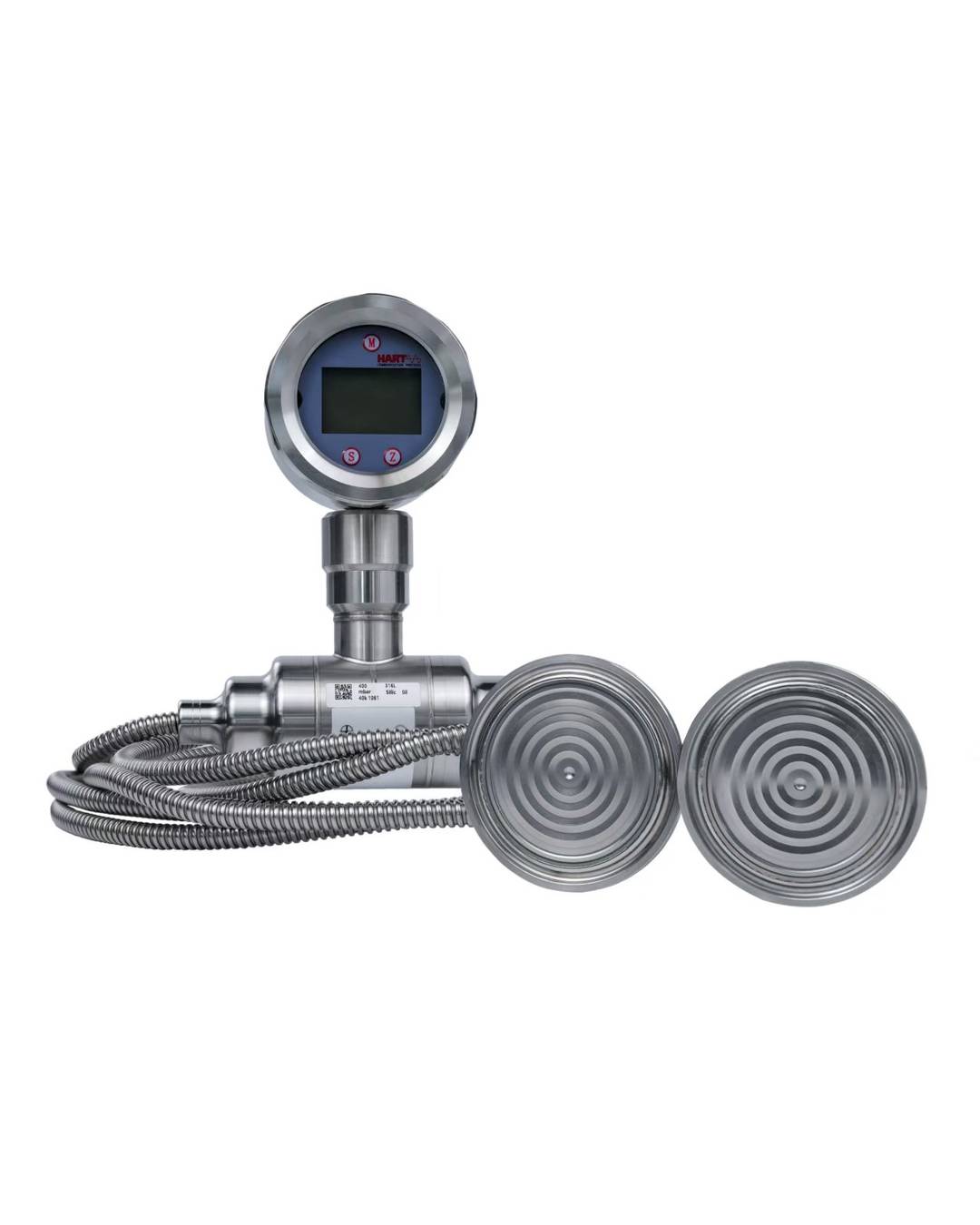
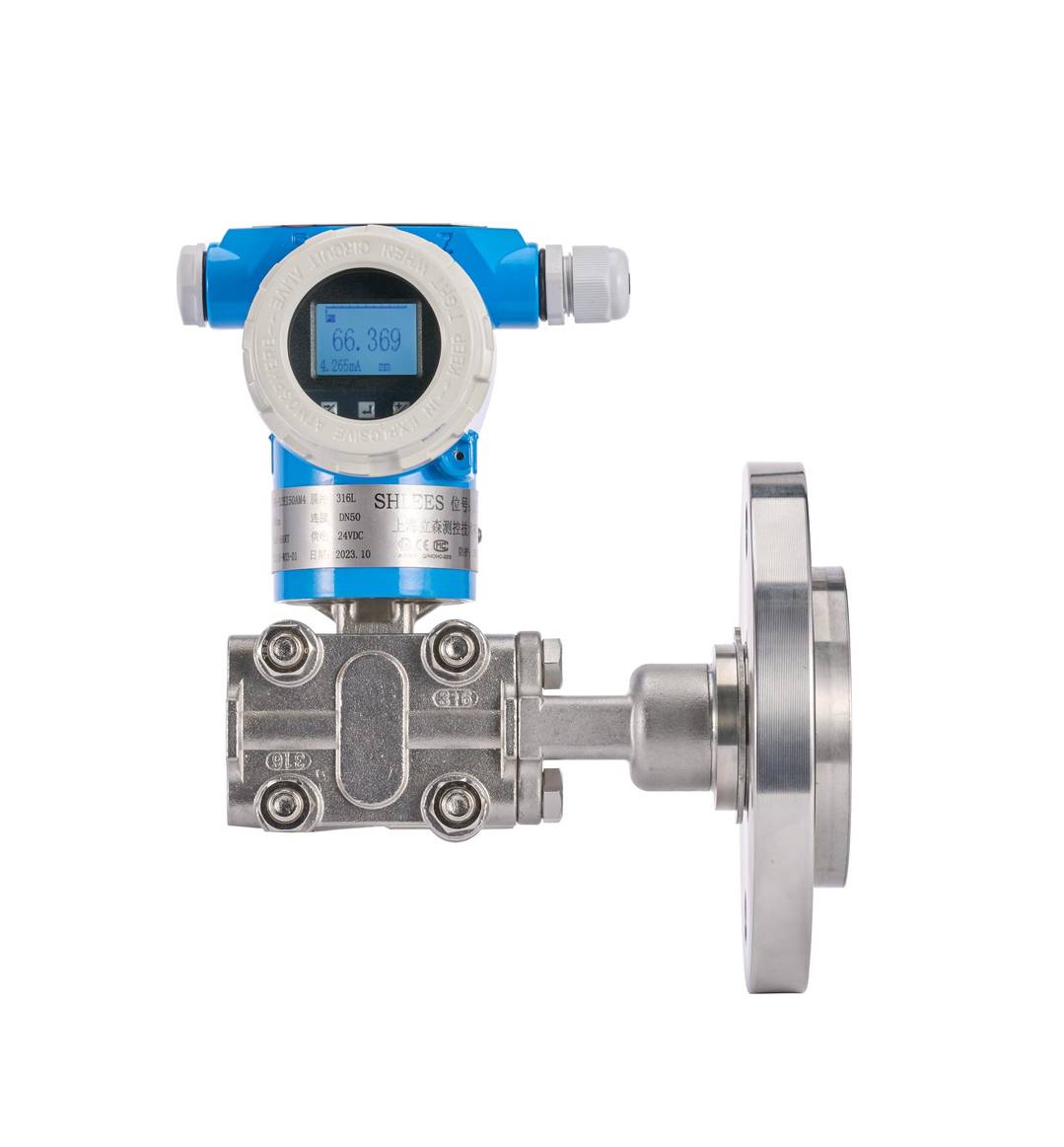

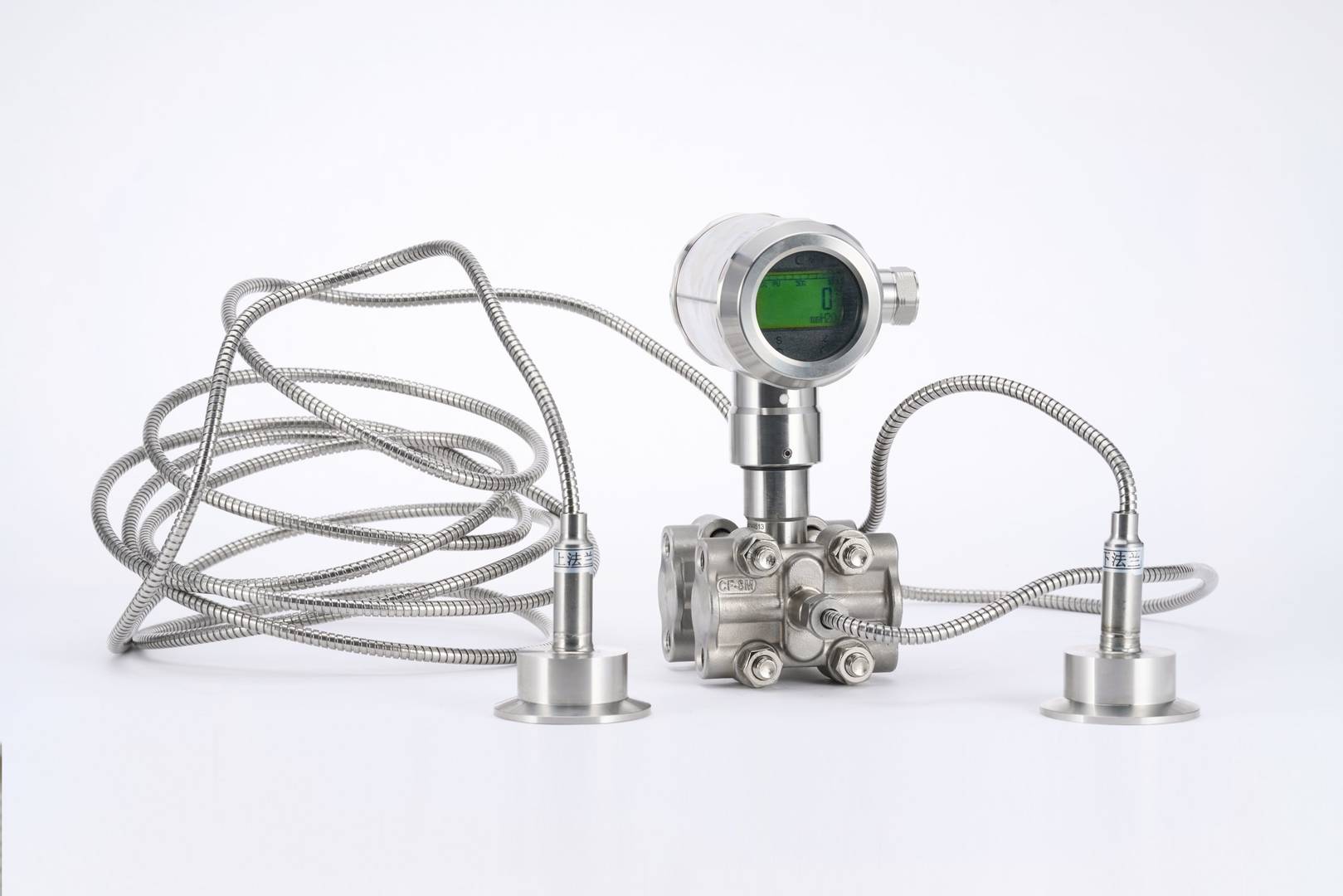
The sanitary differential pressure transmitter is designed for accurate differential pressure and liquid level measurement in food, beverage, dairy, pharmaceutical, biotechnology and cosmetic production processes. By measuring the pressure difference between two points, it can monitor liquid level in sealed or pressurized tanks, filter condition, flow and other critical process variables.
The transmitter can be configured with hygienic process connections and flush diaphragm seals to reduce product accumulation around the measuring point. This design makes the instrument easier to clean and suitable for production lines with frequent product changes or strict hygiene requirements.
Key Advantages of Sanitary Differential Pressure Transmitter
Hygienic Process Design
The flush diaphragm design minimizes cavities and blocked pressure ports where viscous media, particles or product residue may accumulate. Hygienic clamp and other sanitary process connections can be selected according to the existing tank or pipeline design.
Reliable Tank Level Measurement
For sealed or pressurized vessels, the differential pressure transmitter measures the difference between the pressure at the bottom and top of the tank. The measured differential pressure can then be converted into liquid level based on the density of the process medium.
Suitable for Difficult Process Media
Remote diaphragm seals help isolate the sensing element from viscous, sticky, crystallizing or particle-containing media. This reduces clogging risks and improves measurement reliability in demanding hygienic processes.
Easy Integration into Control Systems
The sanitary differential pressure transmitter can be configured with common industrial output and communication options for connection to PLC, DCS, display or process control systems. Measurement range, output signal, process connection and wetted materials can be selected according to project requirements.
Typical Applications of Sanitary Differential Pressure Transmitter
Food and beverage processing: Level measurement in mixing tanks, storage vessels, syrup tanks, fermentation tanks and beverage production systems.
Dairy production: Monitoring milk, cream, yogurt and other dairy products in sanitary processing and storage equipment.
Pharmaceutical and biotechnology processes: Differential pressure or level measurement in preparation tanks, purified water systems, reactors and hygienic production vessels.
Filter monitoring: Measuring the pressure difference before and after sanitary filters to identify blockage, contamination or required filter replacement.
Cosmetic manufacturing: Level and pressure monitoring for creams, lotions, gels and other viscous cosmetic products.
How to Select a Sanitary Differential Pressure Transmitter
To recommend the correct configuration, please provide:
- Differential pressure or liquid level measuring range
- Maximum static and operating pressure
- Process temperature and ambient temperature
- Medium name, density and viscosity
- Tank height and installation position
- Required sanitary process connection
- Wetted material and diaphragm material
- Output signal or communication protocol
- Cleaning method, such as CIP or SIP
- Explosion-proof or other certification requirements
For tank level applications, information about the tank type, upper and lower tapping positions, liquid density and operating pressure is especially important.
FAQ-Sanitary Differential Pressure Transmitter
What is a sanitary differential pressure transmitter used for?
It is mainly used for measuring differential pressure, sealed-tank liquid level, filter pressure drop and flow-related process variables in hygienic production environments.
Can it measure the liquid level of a pressurized tank?
Yes. The high-pressure side is normally connected near the bottom of the tank, while the low-pressure side measures the pressure at the top. The transmitter removes the influence of the gas pressure above the liquid and calculates the pressure generated by the liquid column.
Why use a flush diaphragm seal?
A flush diaphragm avoids narrow pressure channels that may become blocked by viscous, sticky, crystallizing or particle-containing products. It also improves cleanability and reduces residue between production batches.
Is the transmitter suitable for CIP and SIP processes?
A suitable configuration can be selected for CIP or SIP applications. The process connection, seal structure, diaphragm material, filling fluid and temperature limits should be confirmed according to the cleaning conditions.
Can the process connection and measuring range be customized?
Yes. Different measuring ranges, sanitary connections, diaphragm materials, capillary lengths and output signals can be configured according to the tank, pipeline and control system requirements.
Request a Sanitary Pressure Measurement Solution
Send us your medium, measuring range, tank dimensions, operating pressure, process temperature and connection requirements. SHLEES will help select a suitable sanitary differential pressure transmitter configuration for your hygienic process.